
How Much Does It Cost to Build a SaaS in 2026?
Wondering about the cost to build a SaaS in 2026? Learn realistic SaaS development cost ranges, MVP cost factors, hidden risks and how to budget your project.

Introduction
Understanding the cost to build a SaaS in 2026 is not just a technical question. It is a business decision.
For founders, CTOs and product leaders, the real challenge is rarely “Can this be built?” The harder question is: “Can we build the right version, with the right scope, at a cost that makes sense for the business?”
A SaaS product can be a lean MVP, a vertical platform for a specific industry, an internal business tool, a customer-facing web application or a complex cloud platform with integrations, analytics, automation and AI features. Each option has a very different budget profile.
This guide explains what affects SaaS development cost, what a realistic MVP cost looks like, where budgets often go wrong and how to approach your project before requesting a fixed-price quote.
What Is the Typical Cost to Build a SaaS?
There is no single fixed price for SaaS development because the scope can vary dramatically. However, most B2B SaaS projects fall into three broad ranges:
| SaaS type | Typical scope | Indicative budget range |
|---|---|---|
| Lean SaaS MVP | Core workflow, user accounts, basic admin, simple integrations | €17,000 – €40,000 |
| Growth-ready SaaS | Multi-role access, billing, dashboards, integrations, stronger UX and QA | €40,000 – €90,000 |
| Complex SaaS platform | Multi-tenant architecture, advanced security, analytics, automation, AI or enterprise integrations | €90,000 – €200,000+ |
These ranges are not a quote. They are a planning framework. The final price depends on what the product must do, how polished it needs to be, how many systems it connects to and how much scalability, security and compliance are required from day one.
For many businesses, the smartest first step is not building the full product. It is defining the smallest valuable version that can validate the business model without creating technical debt.
Why SaaS Development Cost Varies So Much
Two SaaS ideas can sound similar in a meeting but require completely different levels of engineering.
A simple booking platform with login, admin management and email notifications is not the same as a SaaS platform with subscription billing, role-based permissions, external APIs, reporting dashboards, audit logs and AI-assisted workflows.
The biggest cost drivers are usually:
- Product complexity
- Number of user roles
- Multi-tenant architecture
- Billing and subscription logic
- Third-party integrations
- Data model complexity
- Security and compliance requirements
- Admin dashboards
- UX/UI expectations
- Cloud infrastructure
- QA automation and testing depth
- Post-launch support and maintenance
This is why comparing SaaS quotes only by total price can be misleading. A lower quote may exclude architecture, QA, DevOps, security, documentation or support. Those costs do not disappear; they usually return later as delays, bugs or rebuilds.
MVP Cost: What Should You Build First?
For many companies, the most important budget question is not “How much does the full SaaS cost?” but “What should the first version include?”
A SaaS MVP should prove the business value of the product, not include every feature on the roadmap. In practical terms, an MVP usually includes:
- One clear user journey
- Authentication and user management
- One or two core workflows
- Basic admin functionality
- Essential dashboards or reporting
- Initial cloud deployment
- Basic security foundations
- Enough UX quality for real users
- Analytics or feedback mechanisms
The typical MVP cost depends on how ambitious the first version is. A focused MVP can often be built within a controlled budget, while an overloaded MVP quickly becomes a full product without the discipline of a full product plan.
A good rule: if a feature does not help validate demand, prove operational value or support the first commercial users, it probably belongs in phase two.
Hidden Costs Many SaaS Buyers Miss
SaaS development cost is not limited to coding. Some of the most important costs are easy to overlook during early planning.
Discovery and product definition
A vague product brief creates budget risk. Before development starts, the team needs to define users, workflows, priorities, technical risks, integrations and assumptions. This phase reduces uncertainty and makes fixed-price quoting more realistic.
UX and product design
Good SaaS design is not decoration. It affects onboarding, retention, support effort and conversion. For B2B SaaS, clear workflows and intuitive interfaces can make the difference between adoption and abandonment.
If your SaaS needs a strong web interface, onboarding flows, dashboards or customer portals, working with an experienced web development team for your SaaS product can help turn the product vision into a usable platform rather than just a list of features.
Cloud architecture
SaaS products need scalable, secure and maintainable infrastructure. Decisions about hosting, databases, storage, APIs, environments, monitoring and deployment pipelines affect both the initial build and long-term operating costs.
This is especially important for SaaS products expected to support multiple clients, large volumes of data or complex business workflows. In those cases, specialised cloud application development expertise can reduce architectural risk and make the product easier to scale after launch.
QA and testing
Skipping QA may reduce the first quote, but it increases business risk. SaaS platforms often handle payments, customer data, operational workflows or business-critical processes. Testing must be part of the budget from the beginning.
Security and compliance
Security becomes more expensive when added late. Access control, data protection, auditability, secure integrations and compliance considerations should influence architecture early, especially for European companies.
Maintenance and evolution
A SaaS product is never truly “finished”. After launch, you need bug fixing, improvements, infrastructure monitoring, user feedback cycles and roadmap development.
Fixed Price or Time and Materials?
Both models can work, but they solve different problems.
A fixed-price model is useful when the scope is clear, the requirements are stable and the buyer needs budget predictability. It works best after a proper discovery phase.
A time and materials model is better when the product is still evolving, priorities may change or the client wants flexibility during development.
For SaaS projects, a hybrid approach is often the most practical: define and quote a fixed-scope MVP, then move into iterative development once real user feedback starts shaping the roadmap.
How to Reduce SaaS Development Cost Without Damaging the Product
Reducing cost does not mean choosing the cheapest development team. It means making better product and technical decisions.
The most effective ways to control budget are:
- Start with a clear MVP scope
- Avoid building non-essential features too early
- Reuse proven components where possible
- Prioritise integrations that directly support the business case
- Choose a scalable but not over-engineered architecture
- Validate workflows before investing in complex UI
- Plan QA and DevOps from the start
- Work with a team that can challenge assumptions, not just execute tickets
The goal is not to build less. The goal is to build the right first version.
When Does a SaaS Need Custom Development?
Custom software development makes sense when your SaaS depends on workflows, data models, integrations or user experiences that off-the-shelf tools cannot support properly.
It is especially relevant when:
- Your product is the business, not just an internal tool
- You need a differentiated user experience
- You are building a vertical SaaS for a specific market
- You need complex integrations with existing systems
- You require strong control over data and infrastructure
- You plan to scale the product over time
- Security, reliability and maintainability matter from day one
For B2B SaaS, custom software development is often about long-term control. The initial investment may be higher than assembling no-code tools, but the product can be designed around your exact workflows, users and growth plans.
How Unimedia Helps Companies Build SaaS Products
Unimedia Technology works with companies that need to turn complex ideas into reliable software products. As an experienced web development team for your SaaS product</a>, we combine full-stack development, cloud architecture, DevOps, QA and product-oriented delivery to help businesses build scalable web and SaaS platforms.
For SaaS projects, this means supporting the full journey: discovery, technical planning, UX/UI, backend and frontend development, cloud deployment, integrations, testing and continuous improvement.
Whether you need a lean MVP or a more advanced SaaS platform, the priority is the same: define a realistic scope, reduce delivery risk and build a product that can evolve after launch.
Conclusion: The Real Cost to Build a SaaS Depends on Scope, Risk and Timing
The cost to build a SaaS in 2026 depends less on the idea itself and more on the decisions made before development starts.
A well-scoped MVP can help you validate the market, attract users and control investment. A poorly defined product can consume budget quickly without proving the business case.
Before asking for a quote, clarify the problem, the target users, the must-have workflows, the integrations and the first commercial milestone. That will make your SaaS development cost easier to estimate and much easier to defend internally.
If you want budget predictability, start with a focused discovery process and request a fixed-price quote for the first version.
FAQs
How much does it cost to build a SaaS MVP?
A focused SaaS MVP can often range from €35,000 to €80,000, depending on features, UX, integrations, architecture and security requirements. More complex MVPs with billing, multi-role access or advanced dashboards can cost more.
What is the biggest factor in SaaS development cost?
Scope is usually the biggest factor. User roles, integrations, data complexity, security, cloud architecture and QA depth can all increase the final budget.
Is custom SaaS development better than no-code?
No-code can be useful for prototypes or internal validation. Custom SaaS development is usually better when the product needs scalability, security, specific workflows, integrations or long-term control.
Can I get a fixed-price quote for a SaaS project?
Yes, but only when the scope is clear enough. A discovery phase helps define requirements, reduce ambiguity and prepare a realistic fixed-price quote.
How long does it take to build a SaaS?
A lean MVP may take a few months, while a more advanced SaaS platform can take six months or more. Timeline depends on scope, team size, integrations, testing and decision speed.
Want this costed for your own case?
We will write down what we think you are asking for before we put a number on it, so the assumptions are visible while they are still cheap to argue with.
Keep reading
More on SaaS Development
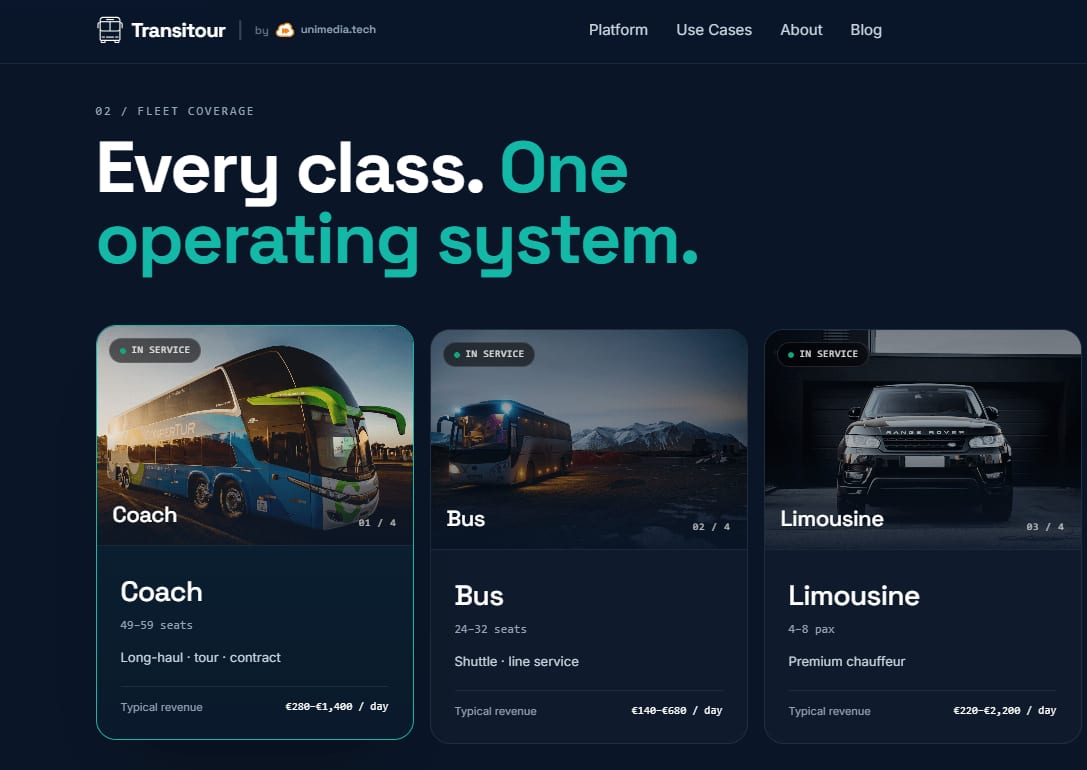
How to Build a Booking Platform with AI (Real Business Case)
Booking platform development with AI-supported delivery. Get an estimate from Unimedia and turn your idea into a scalable SaaS product.
Artificial Intelligence (AI)

AI in SaaS: Practical Use Cases That Drive Business Growth
AI in SaaS can boost growth with automation, personalization, and smarter workflows. Request a demo with Unimedia.
Artificial Intelligence (AI)
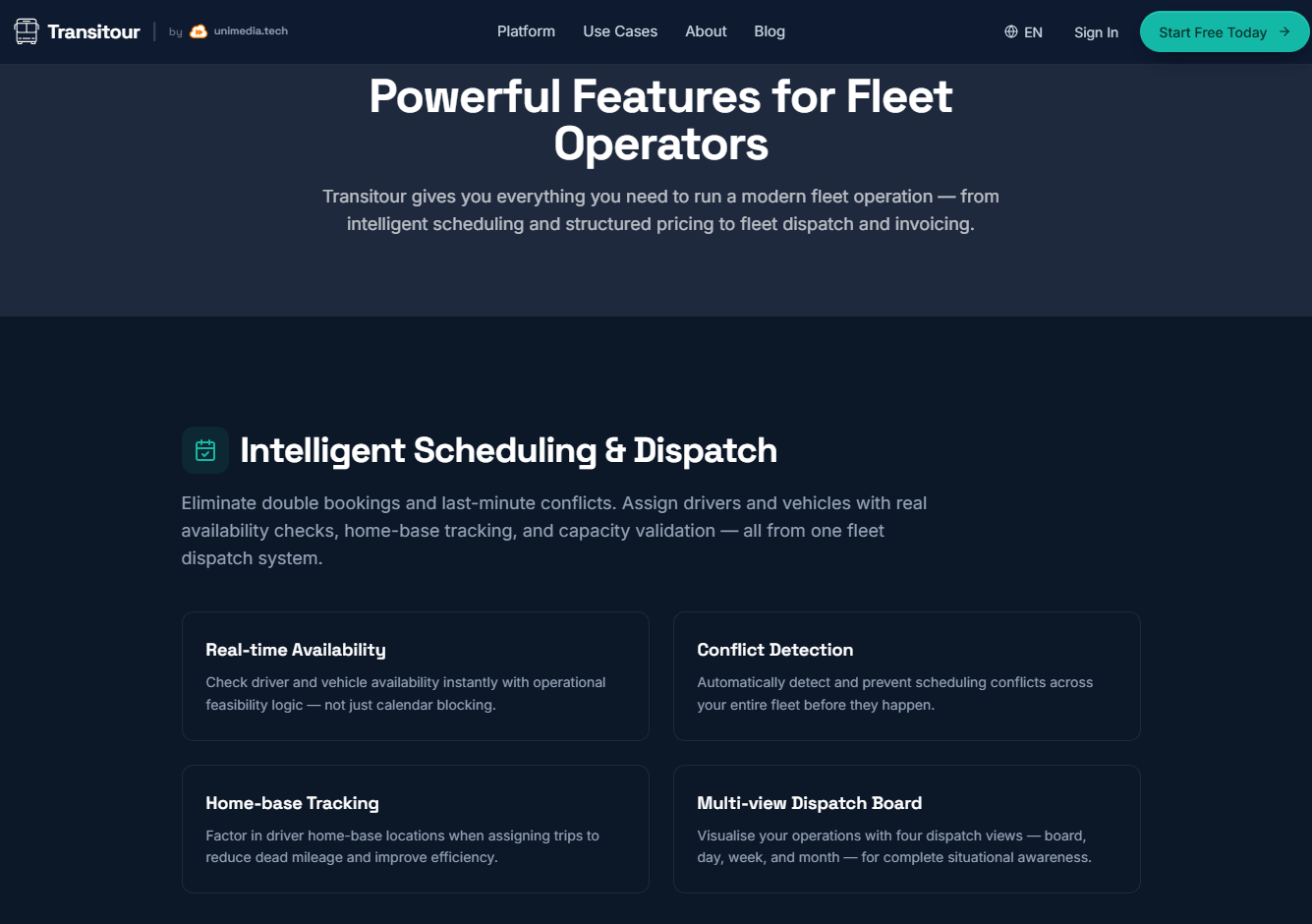
From Manual Quotes to Automated Sales: How to Automate Quotes Without Losing Control
Automate quotes and turn transport requests into sales faster. See how Transitour shows what a custom SaaS can do.
SaaS Development