
Website Development
WordPress websites built by engineers, not assembled by plugins
Corporate sites, online stores and campaign sites for brands whose traffic is worth something. Your brand implemented properly, a CMS your marketing team publishes in daily, and the technical SEO that decides whether any of it gets found.
- WordPressAnd WooCommerce
- SEOStructured from day one
- WCAGAccessibility built in
Selected work
Websites we have built
Programme sites for football academies, platform sites for adtech, and product sites for our own tools. Different brands, the same problem underneath: a lot of offers, one navigation, and a form that has to convert. Several of these run on WordPress, because the client's team publishes in it daily.
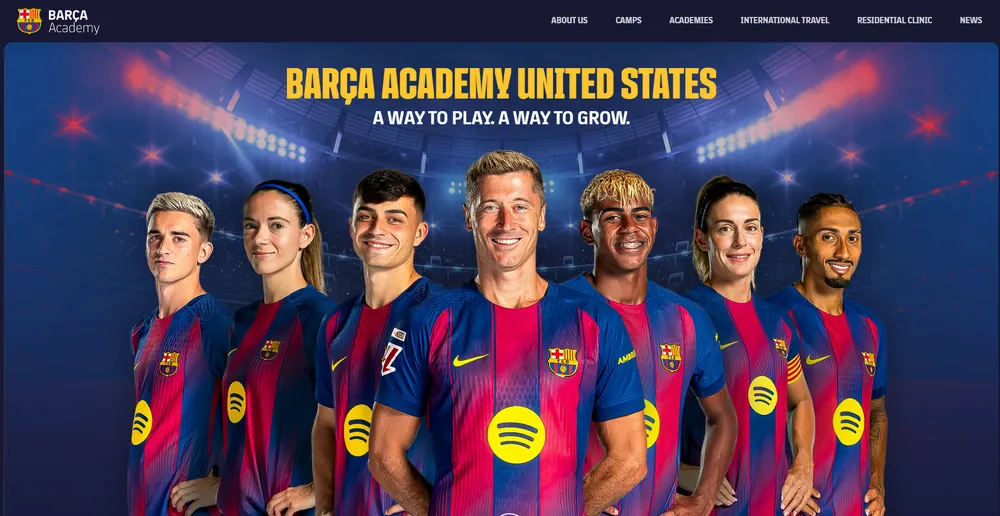
Barça Academy United States
Sports academiesFour programmes, one enrolment journey
City camps, seasonal academies, the Barcelona residential clinic and the international player pathway, organised so a parent finds the right one without reading all four. Enrolment buttons reflect real status — open, waitlist or sold out — and the form submits without a redirect so campaign tracking survives the conversion.
Visit the site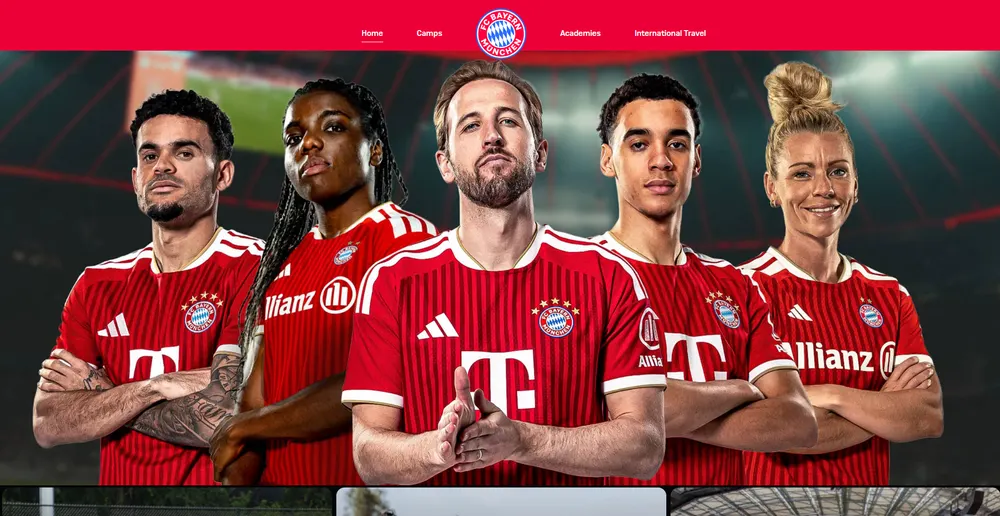
FC Bayern München
Sports academiesCamps, academies and travel under one navigation
Three programme families with different durations, age groups and locations, kept apart in the information architecture so a parent never has to work out which one they are reading about.
Visit the site
Campus Experience
Sports academiesThe Fundación Real Madrid summer camp, in two languages
A rights-holder brand book leaves no room for interpretation, so the work is accuracy rather than invention. Programmes and dates, FAQs and a sign-up path that stays one click from the hero, served in Spanish and English from the same site.
Visit the site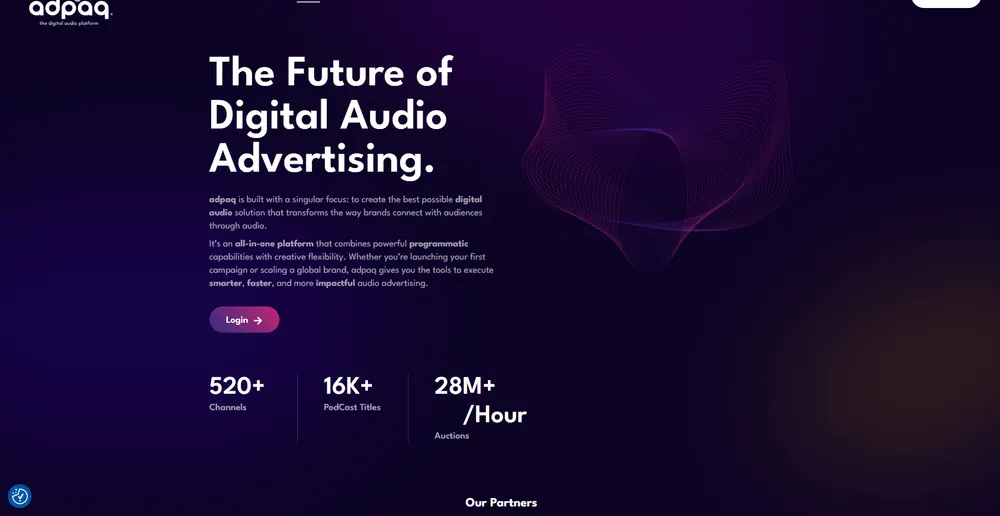
adpaq
Digital audio advertisingProduct site for a programmatic audio platform
A positioning site aimed at media buyers and publishers at once, carrying the inventory figures on the page itself and the platform login for existing customers in the same header.
Visit the site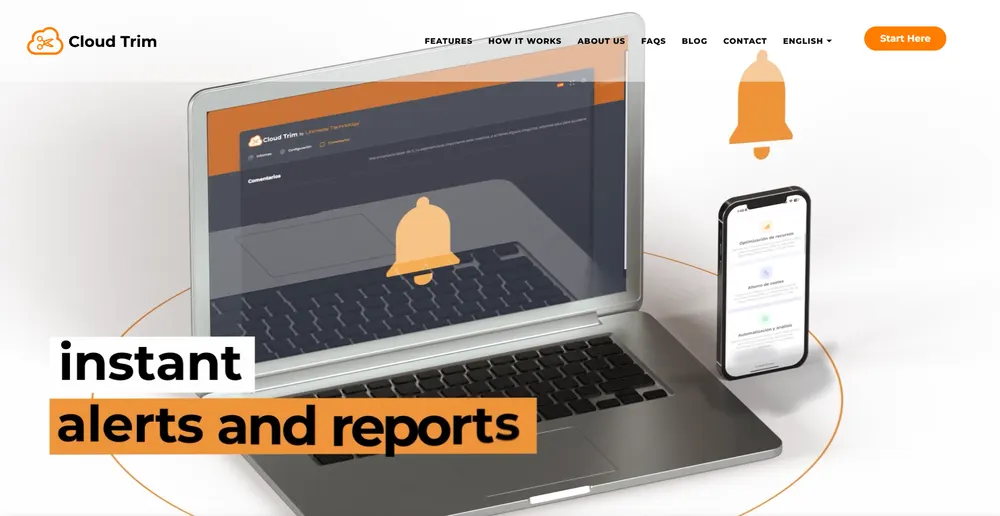
Cloud Trim
Cloud cost managementOur own product, held to the same standard
The marketing site for our AWS cost platform: features, pricing and a blog in English and Spanish, with sign-up as the only thing the page is really asking for. We ship our own work to the brief we sell.
Visit the site
Also delivered: LaLiga Select, the Manchester City Football Language programme site with BSC Education, Confirm, and UK Futbol First. Reference calls are available for serious enquiries.
What we build
Five kinds of website project
Most engagements are one of these, and a good number are two of them at once.
WordPress corporate sites
A custom theme built to your brand rather than a marketplace template bent towards it, with the page structures your content actually has. Your editors get the WordPress admin they already know; they just get one that is not fighting a page builder for control of the markup.
WooCommerce stores
Catalogue, variations, tax and shipping rules, payment gateways and the integrations behind them — stock, ERP, invoicing, fulfilment. Set up so the finance and warehouse side reconciles, because that is where a store stops being a website and starts being an operation.
Campaign and landing pages
Built on the same site rather than on a separate tool, so a campaign inherits the brand, the tracking and the SEO instead of quietly competing with the main site for the same keywords.
Multilingual and multi-region sites
Proper hreflang, per-locale URLs and translation workflows that do not fall apart on the third language. We run our own site in English, Spanish and Catalan, so this is a problem we have hit rather than one we have read about.
Replatforming onto WordPress
Moving off Wix, Squarespace, a dead theme or a site whose original agency has gone quiet. Content, URLs and rankings come across; the redirect map is treated as part of the build, not as a launch-day afterthought.
Technical SEO and Core Web Vitals
Site structure, canonicals, structured data, sitemaps, internal linking and page speed, done as the site is built rather than bought as an audit afterwards that tells you to rebuild it.
Already have a site
If the site exists and the problem is the server
Some of what arrives here is not a new website at all. It is a WordPress site that works, that the team knows, and that is slow, expensive to host, or one unpatched plugin away from an incident.
That is a different service, and we run it as one: we generate your pages once, serve them from a CDN, and retire the server underneath. Same content, same URLs, no PHP or database in the request path.
We did it to this site first, which is why we can talk about it in specifics.

What a website project includes
The site is the deliverable. These are the parts that make it one.
Information architecture first
Several programmes, products or audiences under one roof is a navigation problem before it is a design problem. Getting it wrong costs conversions no amount of design recovers.
Design your brand survives
Pixel-accurate implementation of the brand you already have, including the ones with rights-holder guidelines that leave no room for interpretation.
A CMS your team will use
Editors get a normal admin interface and publish without a developer. Usually that is WordPress, because they already know it; where a project is better served by a Git-backed or headless CMS we will make that case rather than assume it.
Forms and enrolment that convert
Third-party booking and enrolment forms integrated in place, submitting without a redirect, so the conversion is still attributable when it lands.
Tracking wired at build time
Tag Manager, ad pixels and conversion events set up as the pages are built, not bolted on the week the campaign starts and found to be double-counting.
Accessibility and technical SEO
Keyboard paths, focus states, contrast and semantics, tested rather than asserted. Canonicals, structured data, sitemaps and hreflang generated rather than hand-maintained.
How we work
You see the site before you pay for the last of it
Free consultation
A senior engineer, not a salesperson, walks through the goal, the brand, the content you already have and whatever is running today.
Structure and scope
The sitemap, the page types, the CMS decision and the integrations, written down with a cost attached before anyone commits. The document is yours either way.
Design and build in sprints
Two-week cycles with a demo at the end of each one, on a staging URL your team can click through. Accessibility and page speed are checked as pages are built rather than audited afterwards.
Launch with redirects handled
Old URLs mapped and monitored, metadata compared page by page against the old site before cutover. A better new site that drops your rankings is not an improvement.
Support afterwards
Updates, backups, security patching and an ongoing team if you want one. The engineers who built it stay reachable.
Common questions
What buyers ask about website projects
Do you work with WordPress?
Yes, and it is the default rather than a compromise. Several of the sites above run on it because the client's team publishes in it daily, and that mattered more than the last few kilobytes. What we do not do is build you a page-builder site with forty plugins and hand you the maintenance bill — the theme is custom, the plugin list is short and justified, and you get told what each one is for.
Can you build an online store?
Yes, on WooCommerce. The website part of a store is the easy half; the half that decides whether it works is the integrations — stock, pricing, tax and shipping rules, payment gateways, invoicing, and whatever your warehouse or ERP expects to receive.
We scope that side explicitly rather than treating it as configuration, because a store that takes orders your operations team cannot fulfil is worse than no store.
Do you do SEO, or just build the site?
We do the technical half, and it is part of the build rather than a separate line item: site structure, URLs, canonicals, structured data, sitemaps, internal linking, hreflang, page speed and Core Web Vitals. Content strategy, keyword research and link building are a different discipline, and we will happily work alongside whoever does yours rather than claim we do all of it.
Will we lose our SEO if we rebuild?
Not if the migration is done properly, and this is where most rebuilds do their damage. URLs stay byte-identical wherever possible, everything that must move gets a 301, and metadata is compared page by page against the old site before cutover.
We treat that comparison as a release gate rather than a post-launch cleanup task.
Can you work to our brand guidelines?
That is most of the work above. Rights-holder brand books are strict by design, and implementing one accurately is a different discipline from designing freely. We build to the guideline and raise the conflicts rather than quietly resolving them ourselves.
What does hosting and maintenance cost afterwards?
A WordPress site costs what its host costs, plus updates and backups, and we will give you that figure before you choose rather than after. If your site is content-led and the hosting bill is the thing bothering you, the honest answer may be a static migration instead — we have a separate page for that, and we will point you at it if it fits you better.
How long does a site take?
A focused marketing site is typically a matter of weeks; a store or a multilingual estate is longer and depends on the integrations. Either way you get a written scope with a cost before committing, rather than a range that quietly widens.
Tell us what the site has to do
One call with a senior engineer. You will leave with a clearer plan than you arrived with, whether or not you hire us.