
Custom Headless CMS Development: When Does It Make Sense?
Headless CMS can offer much more flexibility, but not every business needs it. Find out when a custom headless architecture is worth considering.
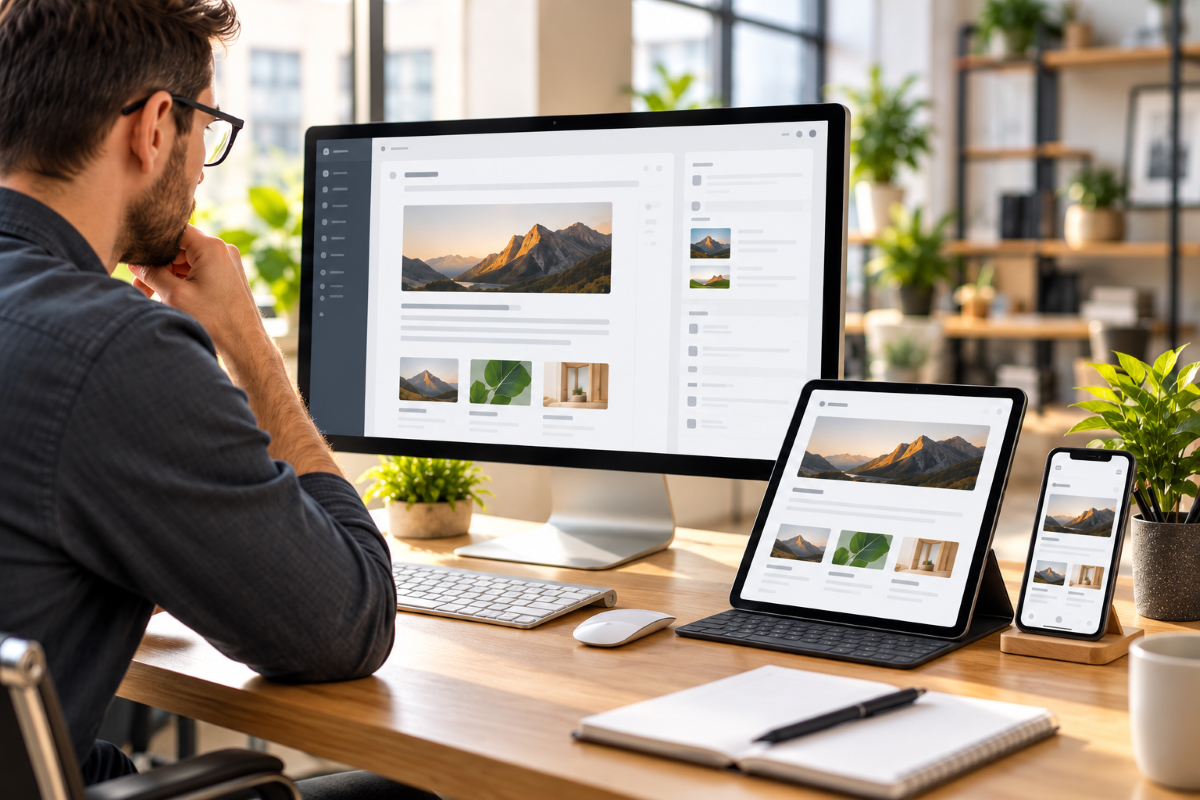
Custom headless CMS development can give businesses much more freedom over how content is managed and delivered. But that flexibility comes with additional architectural decisions, development work and ongoing technical responsibility.
That is why headless should not be treated as the automatic “modern” replacement for a traditional CMS. For a straightforward website, it may add complexity without creating enough value. For a growing digital platform, multiple customer-facing channels or a highly customised frontend, however, separating content management from presentation can solve very real problems.
So when does a headless approach actually make sense? The answer depends less on technology trends and more on what your business needs the platform to do.
What Is Custom Headless CMS Development?
In a traditional CMS, the system used to manage content is closely connected to the layer that displays it to users. Editors create content and the same platform largely determines how that content appears on the website.
A headless architecture separates those two responsibilities. The CMS manages the content, while a separate frontend retrieves that content and presents it to users.
This means the development team has much more freedom to build the customer-facing experience using modern frontend technologies, while content teams still have an interface for creating and updating information.
The word custom is important. A custom headless CMS development project is not simply a matter of installing a CMS and connecting a website. Content structures, APIs, frontend architecture, integrations, editing workflows and deployment all need to fit the way the business actually operates.
When Does a Headless CMS Actually Make Sense?
Headless becomes particularly useful when the limitations of a conventional website architecture start affecting the product, the content team or the wider technology environment.
You Need Content Across Multiple Channels
If the same content needs to appear on a website, mobile experience, customer application or another digital channel, tying that content directly to one website frontend can become restrictive.
A headless architecture allows the content layer to remain separate from the interfaces consuming it. The same underlying content can therefore be made available to different applications without requiring each one to have its own independent content-management process.
This does not mean that every organisation publishing in several places needs headless. But when multi-channel delivery becomes a core requirement rather than an occasional exception, the architecture starts to make much more sense.
Your Frontend Needs More Freedom
Some businesses need much more than a conventional collection of marketing pages. Their website may include interactive tools, personalised experiences, complex interfaces or functionality that behaves more like an application than a traditional site.
In those situations, tightly coupling the frontend to a conventional CMS can constrain development.
With a headless approach, teams can build the frontend independently using technologies suited to the product requirements. At Unimedia, our website development work includes modern web applications and frontend development using technologies such as Angular, React and Vue, alongside Headless CMS when the architecture calls for it.
Your Website Is Becoming a Digital Product
There is an important difference between a website that mainly publishes company information and a platform that has become part of the service customers use.
A digital product may include authenticated areas, dashboards, workflows, dynamic data, integrations or application-like functionality alongside editorial content.
As that complexity increases, treating the CMS as the centre of the entire architecture can become limiting. Separating content from application logic makes it possible for each part of the system to evolve more independently.
This is especially relevant when the platform is expected to grow over several years rather than remain a relatively stable corporate website.
You Need to Integrate Several Business Systems
Modern websites and platforms often depend on much more than CMS content. They may also exchange information with CRMs, internal databases, customer platforms, analytics systems, ecommerce tools or other APIs.
At that point, the project is no longer simply about choosing a content editor. It becomes an integration and software architecture problem.
A development partner with broader custom software development capabilities can assess how the CMS fits into the complete system rather than treating every requirement as something the CMS itself needs to solve.
Development and Content Teams Need to Work Independently
Marketing teams need to publish and update content without waiting for developers. Development teams, meanwhile, need to improve the frontend without disrupting everyday content operations.
A well-designed headless implementation can give both teams greater independence.
But editor experience still matters. A technically elegant architecture that makes routine publishing frustrating is not a successful CMS project. Content models, previews and publishing workflows need to be considered alongside frontend architecture.
When Headless CMS May Be More Than You Need
Headless is not automatically the right choice just because it offers more flexibility.
If your business needs a relatively straightforward website, has one main publishing channel and can achieve the required functionality comfortably with a conventional CMS, introducing a decoupled architecture may create unnecessary development and maintenance work.
There are also organisational considerations. A headless setup normally relies more heavily on development expertise because the frontend is a separate application. Changes that would be handled through themes or templates in a traditional CMS may require software development instead.
That trade-off can be entirely worthwhile when the frontend is strategically important. It is harder to justify when the website mainly needs standard pages, news, forms and occasional content updates.
The right question is therefore not “Is headless better?” but “What problem would headless solve for us?”
Custom Headless CMS vs Traditional CMS
The most useful comparison is not based on which architecture is newer. It is based on how much flexibility your organisation actually needs.
- Traditional CMS: often a good fit for relatively straightforward websites where content management and website presentation can remain closely connected.
- Headless CMS: becomes more attractive when content must support different frontends, channels or more complex digital experiences.
- Custom headless architecture: makes particular sense when integrations, application functionality, bespoke frontend requirements or long-term platform evolution are central to the project.
There is no advantage in adding architectural complexity that the business will never use. Equally, forcing an increasingly complex digital product into an architecture designed for a simple website can create its own costs and constraints.
What Should a Headless CMS Development Project Include?
A successful project involves more than selecting a CMS platform. Before development starts, the team should understand the content, users, integrations and technical environment that the new system needs to support.
A typical discovery process should consider areas such as:
- Which types of content need to be managed.
- Who creates, reviews and publishes that content.
- Which websites, applications or channels will consume it.
- What the frontend experience needs to do.
- Which existing systems must be integrated.
- How authentication or permissions work where relevant.
- How preview, testing and deployment will be handled.
- How the platform is expected to evolve after launch.
These decisions help determine whether headless is justified in the first place and, if it is, what architecture will support the business without adding unnecessary complexity.
Choosing a Headless CMS Development Partner
A headless CMS agency should be able to discuss much more than CMS products.
The project sits between content management, frontend engineering, APIs, integrations and potentially cloud infrastructure. The development partner therefore needs to understand the complete architecture.
When evaluating providers, ask how they would approach content modelling, frontend development, integrations and the editor experience. Find out who will make architectural decisions, how your internal team will work with them and what happens after the first release.
It is also worth looking at the type of software they have delivered rather than simply counting CMS implementations. Experience with complex web applications and integrated platforms can be particularly valuable when the reason for going headless is that your website is evolving into something more sophisticated.
You can see examples of the web, cloud and custom platforms Unimedia has delivered in our case studies.
Is Headless the Right Architecture for Your Business?
Headless CMS development makes the most sense when flexibility has a clear purpose: supporting multiple digital experiences, enabling a highly customised frontend, integrating with a broader technology ecosystem or allowing a digital platform to evolve beyond the constraints of a conventional website.
If none of those requirements apply, a simpler architecture may be the better engineering decision.
That is why the architecture should follow the business problem rather than the trend. At Unimedia, we design and develop modern websites and web applications around the requirements of the product, including Headless CMS when decoupling the content layer provides a real advantage.
If you are considering a new web platform and are unsure whether headless is justified, talk to our web development team about the architecture, integrations and content requirements before committing to a particular approach.
FAQs
What is custom headless CMS development?
Custom headless CMS development involves building a digital platform in which content management is separated from the frontend that presents the content. The CMS, content models, APIs, frontend and integrations are configured or developed around the specific needs of the business.
When should a business use a headless CMS?
A headless CMS is particularly useful when content must serve multiple digital channels, the frontend requires extensive customisation, the website behaves more like an application or the platform needs significant integrations with other systems.
Is a headless CMS better than a traditional CMS?
Not necessarily. A traditional CMS can be the more efficient option for a straightforward website with standard content requirements. Headless becomes valuable when the additional architectural flexibility solves a specific business or technical problem.
Does a headless CMS make content editing harder?
It should not if the project is designed properly. Content modelling, previews and publishing workflows need to be considered as part of the implementation so that editors can work efficiently while developers retain flexibility over the frontend.
What should I look for in a headless CMS development company?
Look for a team that understands frontend development, software architecture, APIs and system integration as well as CMS implementation. They should also be able to explain why a headless approach is appropriate for your requirements rather than recommending it by default.
Want a site that loads fast and gets found?
We build sites that are quick on a phone on mobile data, and structured so search engines and AI assistants can actually read them.
Keep reading
More on Web Development

QA: The Key to Software Quality
Ensure top software quality. We deliver high-performance, custom-built solutions backed by expert QA testing every step of the way.
App development

Unlocking Potential: How Headless CMS Transforms Custom Software Development
Discover how headless CMS boosts custom software development. Learn the benefits, types, and how to choose the right one.
Web development

Unleashing the Power of AJAX in Custom Software Development: A Comprehensive Guide
Explore the power of AJAX in custom software development. Learn its benefits, use cases, and how integrating it leads to robust applications.
Web development